

Big Project Mentality with Small Project Agility: How and Why to Scale your Editorial Team.
This week I discuss ideas around the conversation of scaling an editorial team to suit the size and scope of the editorial challenge.


As technology advances and budgets remain tight, there are many who think that editorial teams will shrink in the future. Many productions, citing technological advances, now expect editors to take on tasks traditionally handled by assistants. Additionally, many believe that AI will soon render the role of an assistant editor obsolete. These assertions are often uninformed, lacking substantive arguments or an understanding of the technology. I feel we often fall down in our approach to effectively understand how and why to scale an editorial department.
As frustrating as many (most?) schedules can be I have experienced some editors arguing that schedules cannot be met when, in reality, they may be overly cautious or resistant to methods of using a larger team to achieve this task. While there are legitimate reasons to push back against unrealistic schedules, speed is often possible—if producers are willing to allocate the necessary budget.
There is a danger, if too complacent, that we will lose the editor's role as the head of the department, as they may soon find themselves without a department to lead. But how does an editorial team work as it scales, and what are the circumstances in which the expanded team is needed.

Different Scales of Editorial Teams
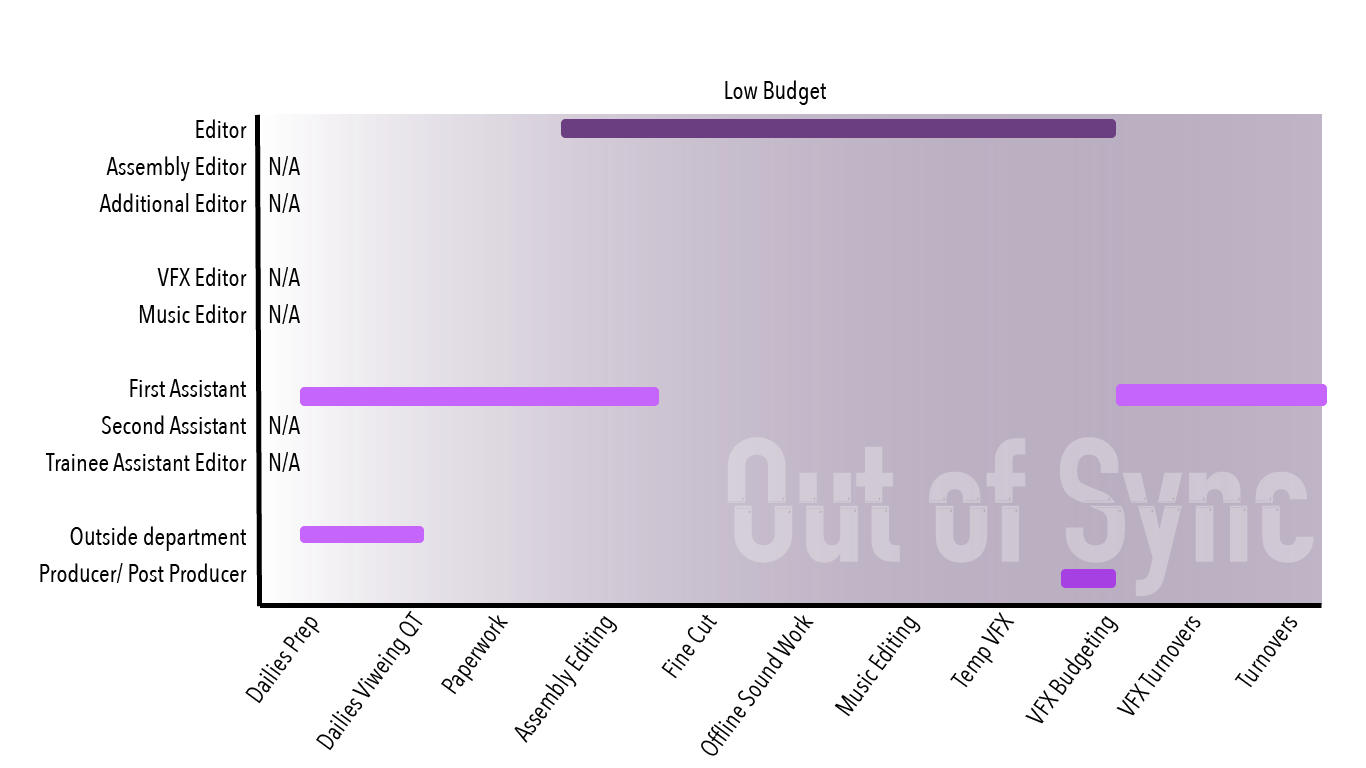
Last week, I published an interview with Patryk Czekalski about his journey from Poland to Ireland and then to London, and his experience as an assistant editor in both television and feature film. Patryk provided valuable insights into how—and more importantly, why—the assistant editor’s role varies depending on the scale of a project.
“I started working on independent feature films where I was the only assistant. That was a great learning curve because I had to try everything—VFX temp comps, temp sound work, even a bit of music editing. It allowed me to experience all aspects of post-production and see how they fit together when other departments joined in.”
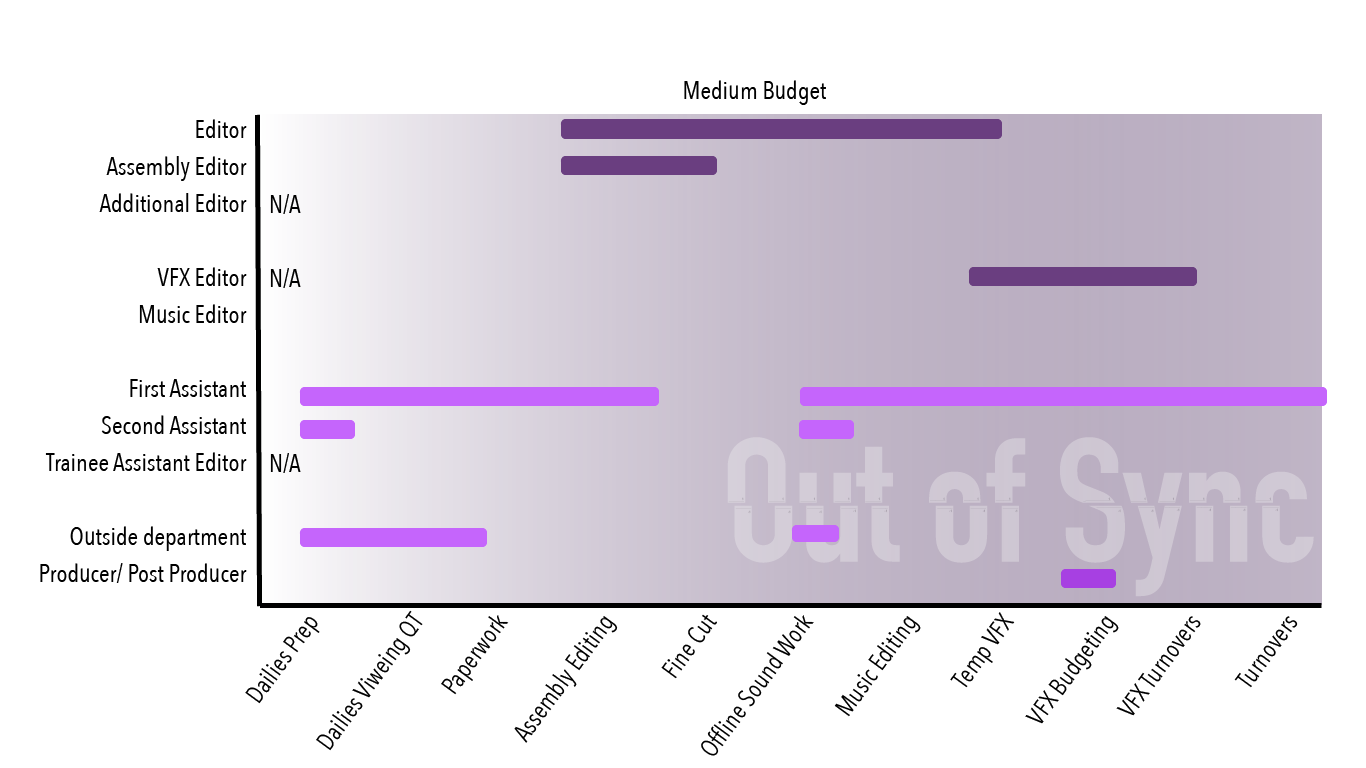
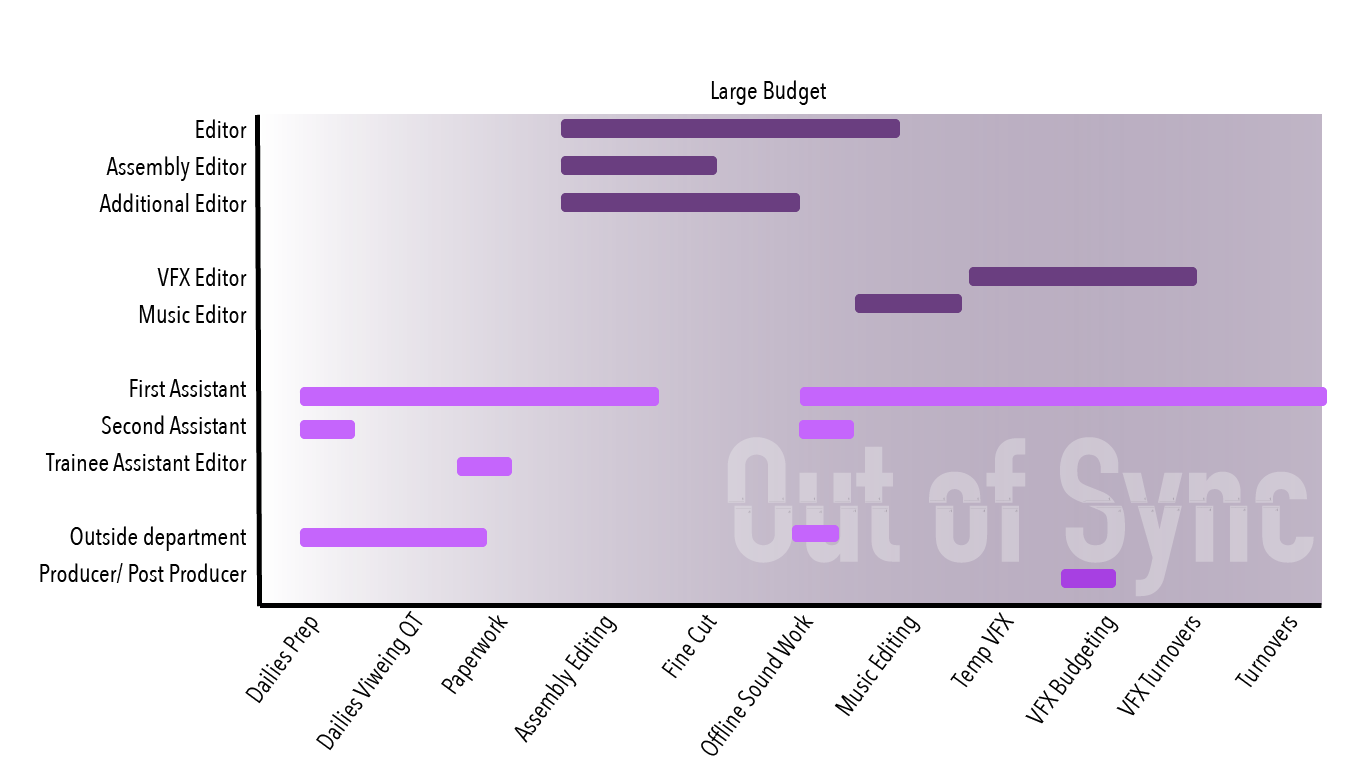
The size of an editorial department is dictated by several factors, including the project's timeframe, scope, and budget. A longer timeframe can reduce costs by allowing the cut to be locked before visual effects, sound, or colour grading begins. However, many schedules are dictated by release dates and the availability of key personnel. Larger productions typically have more stakeholders, increasing the demands on editorial teams during both shooting and post-production.
On big-budget films like Jurassic World, editorial teams expand significantly. “There’s a person for everything—VFX editor, VFX assistant, sound designer, multiple assistant editors,” says Patryk. “Everyone has a specific job, which streamlines the process and minimizes errors. For example, one person ingests dailies, another breaks them down, and a third checks them against the paperwork. It’s faster and more efficient, but only feasible with the right budget.”

"Well, It Was So Much Better in My Day…"
There are many dangers in getting too nostalgic when it comes to the good old days, particularly the apprenticeship model where assistant editors spent their days in the cutting room, learning firsthand from editors. Technology has increasingly separated assistants from this experience. Many assistants now start in post-production facilities or overnight labs, rarely interacting with the editors they support. While this reduces opportunities for learning, it is important to recognise that past apprenticeships also had limitations—assistants often didn’t even have computers, so their work only began after the editor and director left for the day.
Rather than lamenting the loss of traditional mentorship, we must take initiative to make sure that we find the time for assistants to participate. Modern film and TV workflows tend to discourage assistants sitting in on executive notes sessions, and many (including the assistants themselves) believe that they have too much to do to waste their time in these session. But I firmly believe that editors, producers and directors, should make every effort to include the assistants, not always but often, even if for an hour or two each week.
Another lost art, it seems, is asking if you can sit in. No one is ever going to fire you for asking. Patryk recalls his own experience towards the start of his career: “I once asked an assistant if I could shadow them for a day. He said, ‘I haven’t had anyone ask me that in years.’ I couldn’t understand why more runners weren’t eager to learn about workflows. So, I showed up at 5:30 AM and got my first real exposure to professional assistant editing.”
Clinging to the past can also hinder adaptability. Editors who have honed their workflows on small projects often struggle when scaling up, resisting delegation and failing to best utilise a larger support crew.

Delegation
Delegation is a challenge for many professionals, and editors—who often enter the field because they enjoy solitary work—are no exception. Scaling an editorial team requires editors to entrust others with tasks they may prefer to handle themselves.
Patryk notes that feature film editors develop systems to quickly access footage and work efficiently. “Some use ScriptSync, others use line strings or breakdowns. Regardless of the method, all feature film editors I’ve worked with have systems in place to assess takes and beats quickly.” Assistant editors play a key role in preparing alternate takes, line reads, audio, and temp VFX and editors who can work on scale all have their systems in how to utilise all of these skillsets and integrate them into their workflow.

Approaching Team Expansion from a Value Perspective
A major challenge in expanding editorial teams is justifying the cost to producers. Since producers are responsible for managing budgets, they may be hesitant to approve additional team members. However, failing to scale appropriately can create bottlenecks, delaying production and ultimately increasing costs.
Rather than viewing additional staff as an expense, editors should frame them as an investment in efficiency. Ensuring a balanced workload prevents delays and enhances the overall quality of life for everyone on the production.

Big Project Mentality with Small Project Agility
I feel lucky to have started my career in Dublin, where a smaller industry required you to jump between various different scaled projects and learn how to adapt to each. You needed to learn quickly that certain projects prioritised speed while others required prioritised an attention to detail. As a result I was instilled with an ability to judge between the two and adapt as necessary.
While it is important to understand how a bigger team works, it is also important to know how to do many of the tasks yourself. A skilled editor must not only be proficient in many tasks but also have the ability to delegate them when necessary.

The Future of Editorial Teams
The industry often speculates about technology’s impact on editorial teams. While some fear AI will shrink teams, I believe emerging technology will enable growth. I have outlined before my idea on the role of the editorial team in being the guardians of data for the entire production and I believe that this will increase the importance of their role in production.
Regardless of how the industry evolves, we must develop best practices for scaling teams when necessary and fostering a collaborative environment—all in service of telling better stories.