

The Editors Taskbook
Being a solitary job, much of what we learn about best practice is self-thought. The Editors Taskbook and Skills Checklists help cut through the guesswork, offering clear guidance for editors.

Being a largely solitary profession, editing often means working on your own or with a small team. As a result, many of the tasks, responsibilities, and expectations that come with the job are learned day by day over an extended period or in brief chats with other editors on the corridor or facility when they come up for air. While editors have become better in recent years at sharing their experiences and approaches, there’s still a lot of guesswork involved—especially early in your career.
That’s why The Editors Taskbook (along with the Skills Checklists for the Editorial Department document from Rough Assembly) is such a welcome publication. Both are designed to help level the playing field for editors and assistants alike.

The Canadian Cinema Editors and The Editors Taskbook
The Canadian Cinema Editors (CCE) is a professional, non-profit organisation founded in 2007 to promote the art and science of picture editing in Canada. It was established by a group of editors aiming to raise awareness of the creative and technical contributions editors make to film, television, and digital media.
Since its inception, the CCE has supported editors through educational programs, mentorship, networking opportunities, and annual awards that celebrate excellence in editing across genres. The organisation also advocates for greater recognition of editors within the industry and works to foster a strong community among Canadian post-production professionals.
Over the years, the CCE has grown significantly in membership and influence, becoming a vital part of Canada’s screen industry landscape.
Recently, the CCE released The Editors Taskbook, available for free. This practical guide covers the roles, responsibilities, and best practices for both editors and assistant editors. While workflows and job expectations may vary between countries and productions, the Taskbook is a detailed, insightful resource full of useful information for anyone working in post-production.

Planning and Logistics
The document offers clear guidance on contractual expectations, staffing, and editing suite requirements, along with best practices for working remotely and managing travel. One especially practical piece of advice:
“We strongly recommend that there always be an assistant hired; projects without assistants tend to be more chaotic and more expensive in the long run.”

For Editors
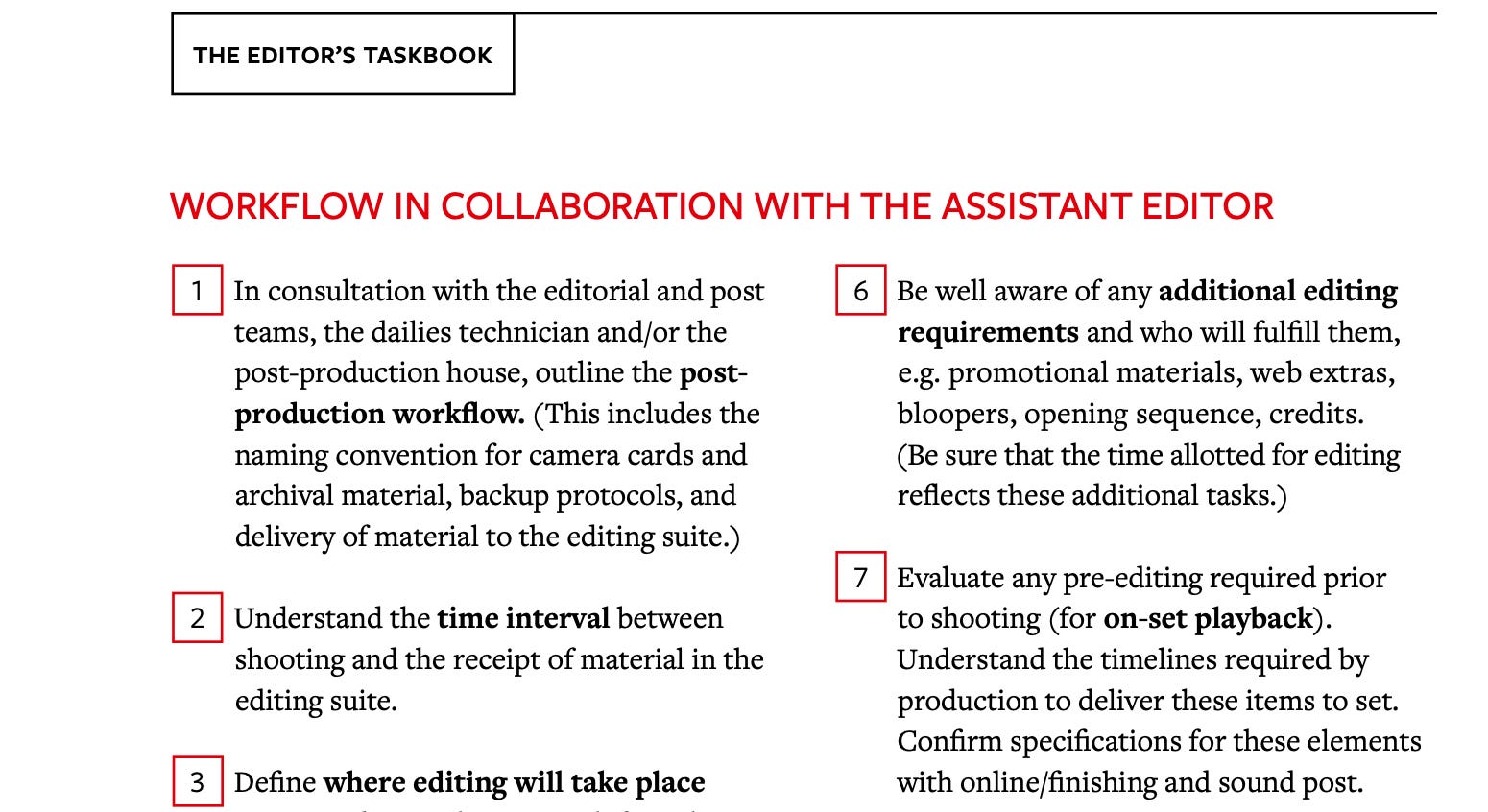
The Taskbook outlines each stage of the post-production process and what’s expected of editors during those phases. There are several helpful checklists, including workflow collaboration with assistant editors. While many of the tasks are familiar, having them clearly laid out in one place is invaluable. It also includes guidance on everything from assemblies to rough cuts and advice for continuing an edit beyond the official end date.

For Assistant Editors
The attention paid to assistants is one of the document’s most valuable aspects. It covers the assistant’s responsibilities throughout the post-production process, offering detailed checklists and reference materials for tasks they’ll encounter before and during a project. It’s an excellent resource for those just starting out or looking to formalise their approach.

Archive and Ergonomics
A standout section is the one on handling archive material—something that’s often overlooked or learned through trial and error. This part of the guide offers best practices that are both practical and eye-opening.
Equally commendable is the section on ergonomics. It provides a thorough guide to setting up an edit suite with physical health in mind—an area that’s too often neglected until discomfort or injury occurs. The advice here is easy to implement and can make a real difference in long-term well-being.

Also Worth Noting
While we’re on the subject of great editorial resources, it’s also worth mentioning the Rough Assembly Skills Checklists for the Editorial Department, published by BECTU’s Rough Assembly. It’s an excellent tool for assistant editors entering the industry, helping to clarify their roles, set professional goals, and provide a practical training checklist. Rough Assembly also maintains a fantastic website with additional resources for both editors and assistants.
I’ll pop them a message.
This info is invaluable. Thank you for posting. The link to the Editors Task Book appears to be broken. Is there any further way to get ahold of this? Thank you